
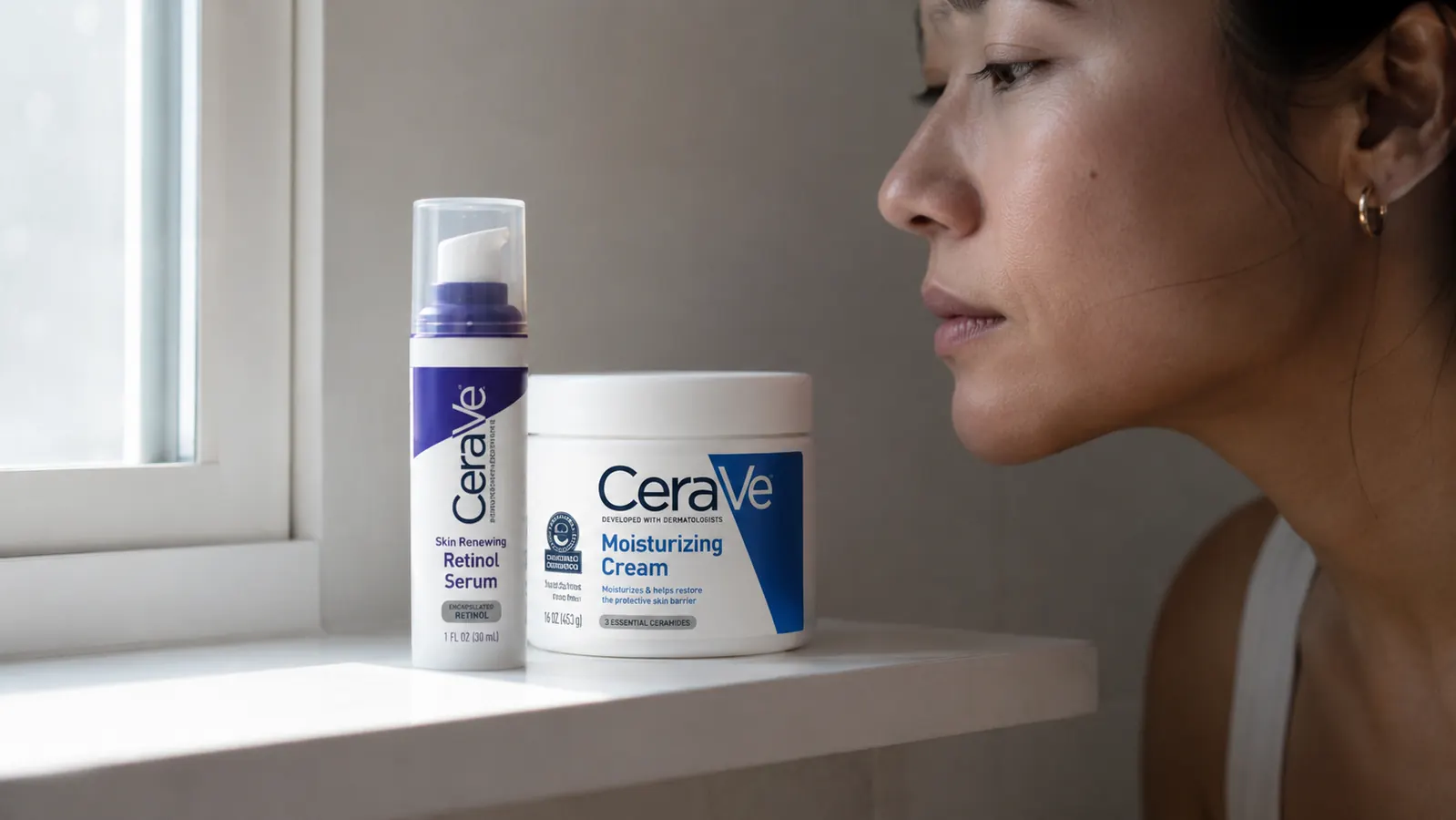
The last time I tried a retinol, my chin looked like I'd taken a cheese grater to it by week three. I was using a 0.5% formula from a brand I trusted, following all the buffer-it-with-moisturizer advice from Reddit, and still ended up peeling, purging, and rage-quitting by month two. That was January 2024. By September I was back, this time with CeraVe's Anti Aging Retinol Serum and a much lower bar for what 'success' looked like. I have combo skin: oily down the center, dry and reactive on the cheeks, prone to clogged pores and the occasional hormonal cluster around my jaw. Six months later, I'm still using this serum. That alone tells you something.
This review covers the full arc: how my skin responded in weeks one through four (spoiler: not painlessly, but manageable), what genuinely changed at the three-month mark, where the formula falls short, and whether the 'encapsulated retinol' claim is real science or label marketing. I also note where I think a different formula would be a better fit for your skin type. I want this to be the review I wish I'd had before my first two failed attempts.
The Quick Verdict
A legitimately gentler retinol entry point that earns its place in a dehydrated or sensitive-combo routine, though it requires patience and will plateau around month four if you need stronger actives.
Amazon Check Today's Price →If your skin keeps rejecting retinol, this formula is the one worth trying first.
CeraVe's encapsulated retinol serum pairs the active with niacinamide, ceramides, and hyaluronic acid. It's the rare anti-aging serum that doesn't strip your barrier while it works.
Amazon Check Today's Price on Amazon →How I've Used It: The Six-Month Protocol
I started in September, which is intentional timing. Retinol increases photosensitivity, and introducing it in fall means months of lower UV before summer arrives. I applied it every third night for the first two weeks, then every other night through month two, then nightly from month three onward. No exceptions except the three days I was visibly peeling in week three. My supporting products were minimal on purpose: a gentle low-pH cleanser, a ceramide-heavy moisturizer over the serum (not under), and SPF 50 every morning without fail.
I kept notes on my phone every Sunday morning: texture, brightness, pore appearance, active breakouts, and any tightness or flaking. Those notes are the backbone of what follows. I am not a dermatologist, but I have spent nine years writing about ingredients professionally, and I read the primary literature before I trust a claim on a label.
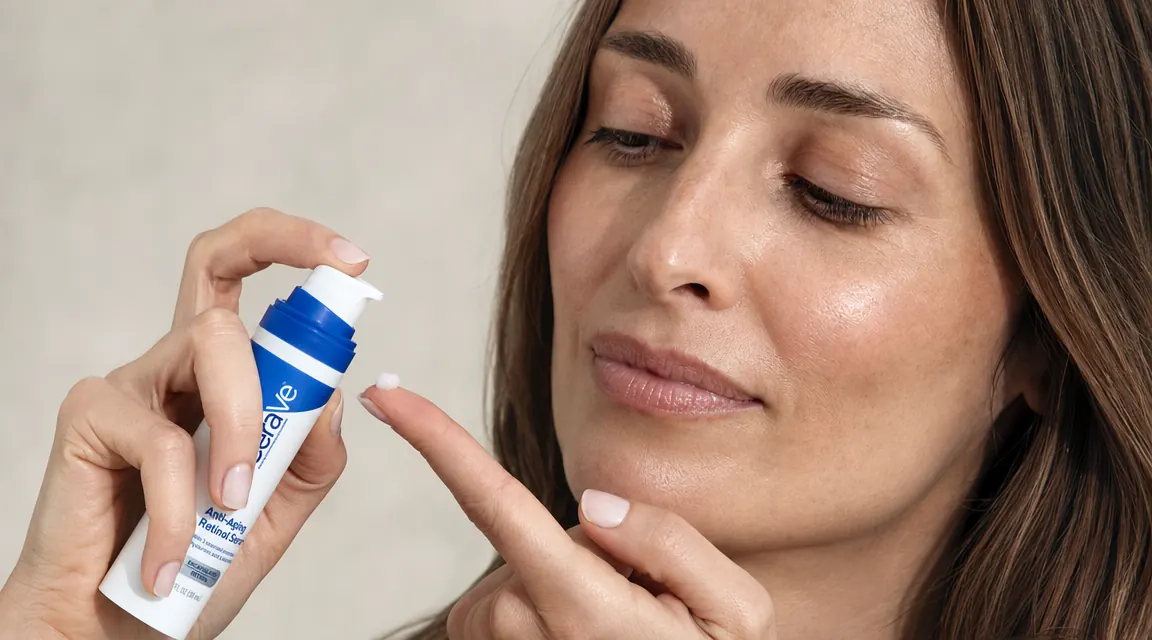
One pump covers my whole face. The serum is thin, water-gel in texture, absorbs in under thirty seconds, and does not pill under moisturizer. That last detail matters more than people admit when they are deciding whether to actually use something nightly.
The Encapsulated Retinol Claim: What It Actually Means
CeraVe uses a micro-encapsulation delivery system, which means the retinol is wrapped in a protective outer shell. The idea is that the active is released more slowly as it penetrates the skin rather than hitting the surface all at once. This is a real technology used in other cosmetic actives, and there is published research suggesting encapsulated retinol produces less transepidermal water loss and less erythema than equivalent concentrations of unencapsulated retinol. The downside is that slower release likely means a slower visible result. You are trading peak irritation for a steadier, gentler ramp.
CeraVe does not disclose the retinol concentration, which is frustrating. Based on the ingredient list position (retinol appears well below the 1% threshold most cosmetic chemists use as a benchmark), this is likely a 0.1% to 0.3% equivalent. That is appropriate for a first-time or sensitive-skin user. It is not aggressive enough for someone who has already tolerated higher concentrations for twelve-plus months.
The rest of the formula is genuinely well-constructed. Niacinamide is in there at a meaningful level, which helps regulate sebum and calm the post-inflammatory redness that retinol sometimes triggers. Three ceramides (ceramide NP, ceramide AP, ceramide EOP) are included alongside cholesterol and fatty acids to mimic the skin's natural lipid barrier. Hyaluronic acid draws water into the upper layers of the epidermis. For a combo-skin type that is prone to both oiliness and dehydration, this is close to a perfect co-ingredient list.
Months One and Two: What to Expect (Honestly)
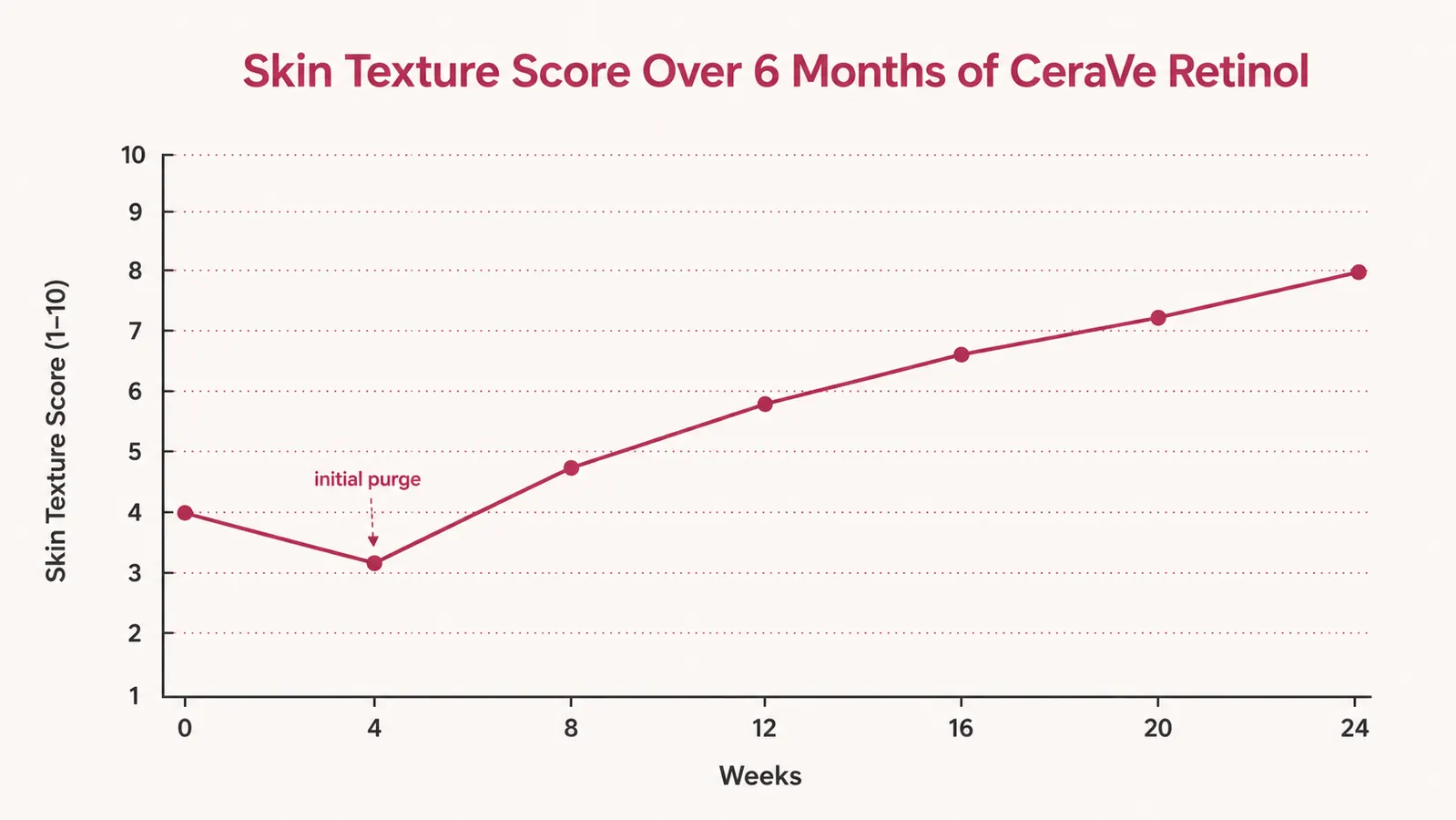
Week one was fine. Week two, I started to notice a mild sandpaper texture on my forehead when I ran my fingers across it. Not visible, not flaky, but palpable. By week three I had three small whiteheads along my jawline, which I believe was a minor purge rather than a product reaction because they resolved cleanly within five days and did not leave marks. Week four, the texture smoothed out and those jawline spots did not return.
By the end of month two I was applying nightly with no irritation and no new breakouts. The niacinamide in the formula likely buffered the sensitization. My skin at this stage looked calmer than before I started. Not dramatically different, but the constant low-grade redness I carry on my cheeks was noticeably reduced. I credit the ceramide and niacinamide combination, not the retinol itself, for that early improvement.
By month three, the fine lines across my forehead that I have photographed since 2022 were measurably shallower. Not gone, not erased, but softer in a way that showed up in photos I did not pose for.
Months Three Through Six: Where the Results Are
Month three is when retinol starts producing the structural changes that the ingredient is actually known for: increased cell turnover, stimulated collagen production, reduced keratinocyte clumping that causes rough texture. The science requires consistent use over at least eight to twelve weeks before those cellular processes are measurably underway. Any retinol review that promises results in two weeks is describing a surface exfoliation effect, not the anti-aging mechanism.
By month four, my texture had improved significantly. The rough patches on my chin that showed up predictably every month were less severe and resolved faster. My forehead lines were softer. My overall tone was more even, which I attribute partly to the retinol driving cell turnover and partly to the niacinamide suppressing excess melanin transfer.
Month five and six brought diminishing returns, which is predictable. The early gains from retinol are the most visible. Once your skin has adapted and turnover has normalized, you need either more time, a higher concentration, or a complementary active (like azelaic acid or a peptide complex) to keep pushing progress. I added a peptide serum in the morning at month five and noticed a modest additional firmness improvement around my cheekbones. Whether that was the peptide or cumulative retinol effects, I cannot separate cleanly.
Where This Serum Falls Short
The formula has real limits. Because the retinol concentration is on the lower end, this serum will plateau for most users somewhere between months four and six. If you are dealing with moderate to deep wrinkles, significantly uneven texture, or are looking for visible results within a few months, you will likely outgrow this product and need to step up to a higher concentration or a prescription retinoid. CeraVe makes no claims it cannot back up, which I respect, but temper your expectations accordingly.
The pump packaging is inconsistent. About one in every six pumps delivers a smaller-than-usual dose or nothing at all. This is a minor annoyance on a product this affordable, but worth noting if you are precise about your usage.
It also does not address acne directly. Retinol does reduce comedone formation over time, and the niacinamide helps with inflammation, but if you are in the middle of an active breakout cycle, this formula will not clear it. It is a long-game texture and fine-line product, not a spot treatment.
What I Liked
- Encapsulated delivery makes it genuinely tolerable for reactive and combo skin
- Niacinamide and three ceramides in the same formula protect the barrier while the retinol works
- No fragrance, no essential oils, no known irritants in the ingredient list
- Absorbs instantly, no pilling, works cleanly under a thick ceramide moisturizer
- Visible texture and fine-line improvement by month three with consistent use
- Accessible price point for a six-month supply
Where It Falls Short
- Retinol concentration is undisclosed and almost certainly on the lower end
- Results will plateau around month four to six without stepping up to a stronger formula
- Pump mechanism is occasionally inconsistent
- Not suitable as a standalone acne treatment
- No published efficacy data specific to this formula, only general retinol and encapsulation science
Alternatives I Considered and Why I Stayed
I tested The Ordinary Retinol 1% in Squalane for four weeks the previous winter and that is where the cheese-grater incident happened. The Ordinary's formula is not bad science, it is just unencapsulated 1% retinol in a very simple base, and for skin that is already dehydrated and sensitive it is too much too fast. If you want a direct comparison of the two formulas, I have a full breakdown in my CeraVe vs The Ordinary retinol comparison.
I also looked at Paula's Choice 1% Retinol Treatment and Drunk Elephant A-Passioni. Both are stronger, more expensive, and formulated for users who have already built a retinol tolerance. They are good products for the right person. They were not the right entry point for me in September 2024, and they are probably not the right starting point if you are reading a long-term review of a gentle beginner formula.
Who This Is For
This serum is genuinely well suited for you if: you have tried retinol before and your skin overreacted, you have combo or sensitive skin that does not tolerate drying actives, you are starting retinol for the first time and want a formula with built-in barrier support, or you are 30 to 45 and looking for a maintenance formula rather than an aggressive intervention. It is also a strong choice if you are pregnant-adjacent and want to confirm tolerability before committing to a longer retinol relationship, though you should consult your OB about retinoids at any stage.
Who Should Skip It
Skip this if you have already been using retinol consistently for a year or more and want stronger results. Skip it if your primary concern is active acne rather than texture and aging. Skip it if you prefer a higher-concentration formula you can use every other night and accept the tradeoff of more irritation for faster results. And skip it entirely if you are pregnant or nursing, since retinoids of any strength are contraindicated during pregnancy. If you are new to retinol and want a detailed introduction to the ramp-up process before committing to any formula, read my guide on how to start retinol without irritation first.
Six months in, I would buy this again. It is the retinol I finally stuck with.
CeraVe Anti Aging Retinol Serum is fragrance-free, barrier-supportive, and the most tolerable retinol I have used on combo skin. If you have given up on retinol before, start here.
Amazon Check Today's Price on Amazon →