
Here is the thing about a product with 155,000 Amazon reviews: you can get lost in them for an hour and still not know what the serum actually contains or why it does what it does. I am Jenna Hart. I write about skincare ingredients for a living, and my starting point with any new product is the INCI list, not the star rating. When TruSkin Vitamin C Serum came up repeatedly in reader questions, I bought it, read the label, cross-referenced the formula against the published evidence, and then used it on my own breakout-prone, dehydrated combo skin. What follows is what the ingredient panel tells you that the marketing doesn't, what the real-world results look like when you know what to expect, and who this serum is actually designed for versus who the Amazon listing implies it's for.
TruSkin Vitamin C Serum is a legitimate product. I want to say that upfront because "honest review" sometimes gets read as a setup for a takedown. This is not that. But the marketing language around it obscures some formulation choices that change how you should use it, what results to expect, and on what timeline. If you are buying this serum based on the front-of-bottle claims alone, you are probably going to be mildly disappointed and not understand why. If you understand what is actually in it, you have a much better chance of using it correctly and getting real results.
The Quick Verdict
A well-formulated, stable vitamin C serum with genuine brightening capability, sold in a way that slightly overpromises on speed and scope. Read the ingredient list before you buy and you will use it correctly.
Amazon Check Today's Price →If you want brightening results without the oxidation roulette, this formula is built for that.
TruSkin Vitamin C Serum uses a stable vitamin C derivative with E and ferulic acid synergy. It is not the most potent formula on the market, but it is one of the most consistently usable. Over 155,000 reviews. Amazon Prime eligible.
Amazon Check Today's Price on Amazon →What the Label Tells You That the Product Page Skips
The Amazon listing for TruSkin Vitamin C Serum leads with "Vitamin C" in the product name, which is accurate. What it does not tell you prominently is which form of vitamin C the formula uses. That distinction matters more than any other single fact about this product.
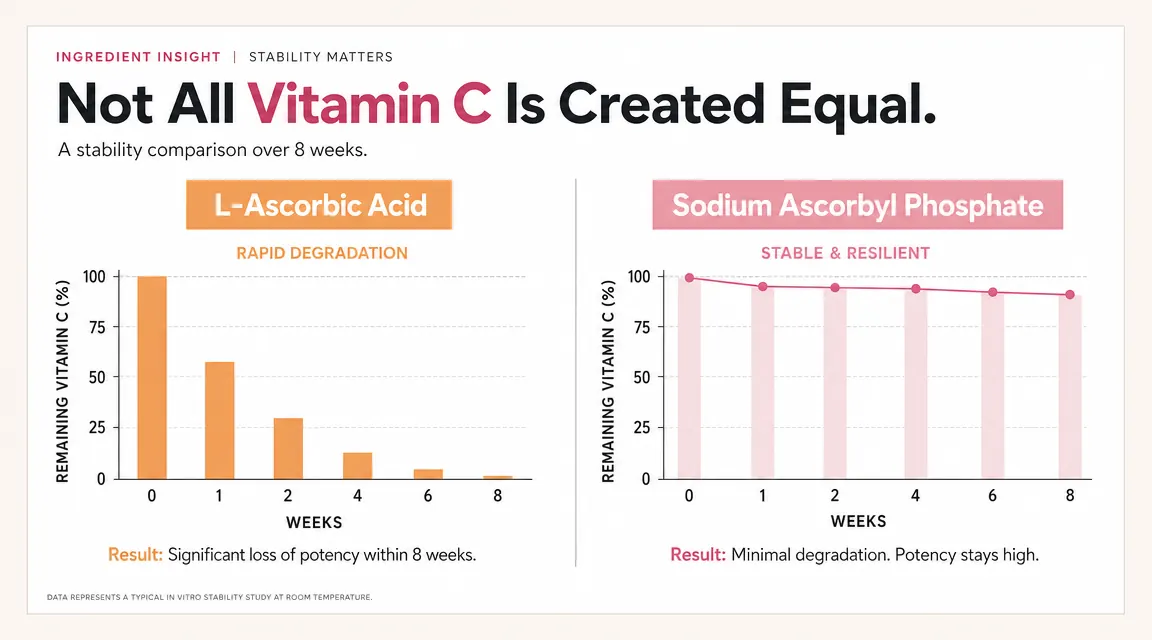
The active vitamin C in TruSkin is sodium ascorbyl phosphate, abbreviated SAP on ingredient lists. It is not L-ascorbic acid, which is the form most clinical research on vitamin C skin benefits is built around. L-ascorbic acid at concentrations of 10-20% has extensive evidence for collagen synthesis stimulation, melanin inhibition, and UV-induced free radical neutralization. SAP is a phosphate ester of ascorbic acid that converts to active ascorbic acid after penetrating the skin. The conversion rate is lower, the total activity is lower, and the timeline to visible results is meaningfully longer. TruSkin does not disclose the concentration of SAP in the formula, which is common practice in cosmetics but unhelpful to anyone trying to compare products honestly. What we do know from the INCI position (SAP appears mid-list, after aloe and hyaluronic acid) is that it is not present at a particularly high percentage.
None of this makes SAP a bad ingredient choice. It makes it a specific ingredient choice with real advantages, particularly around stability. SAP does not oxidize readily. That golden color in the bottle is not oxidation turning your serum into a free-radical machine. It is the natural color of the formula. An L-ascorbic acid serum that turns the same color is a problem. A SAP-based serum that starts golden and stays golden is fine. If you have ever bought a vitamin C serum, opened it enthusiastically, and watched it turn orange by month two, SAP is the direct answer to that problem.
The Supporting Cast: What the Rest of the Formula Is Actually Doing
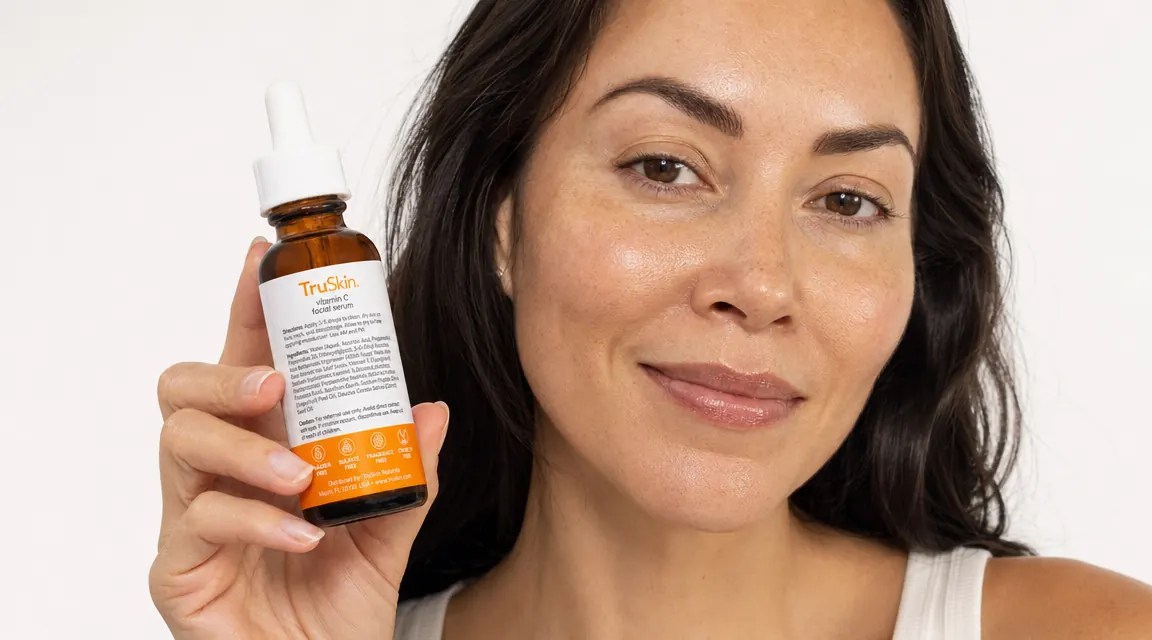
TruSkin pairs sodium ascorbyl phosphate with vitamin E (listed as tocopherol) and ferulic acid. This is the same antioxidant trio at the core of SkinCeuticals C E Ferulic, the serum that runs nearly five times the price. If you want a direct ingredient-by-ingredient comparison of those two formulas, I went deep on it in my TruSkin vs SkinCeuticals C E Ferulic breakdown. The short version: the E plus ferulic combination is genuinely useful, not marketing fluff. These two compounds stabilize the vitamin C and extend its antioxidant activity on the skin. That synergy is one of the things that makes this formula worth taking seriously despite the lower-potency vitamin C derivative.
Hyaluronic acid appears prominently in the marketing as a hydration benefit. It is present in the formula. At typical cosmetic concentrations in a serum, it provides surface hydration and contributes to the comfortable feel of the formula on skin, particularly for dehydrated skin types. It does not penetrate the dermis at meaningful depth in most topical applications. If you are buying this serum primarily for hyaluronic acid benefits, a dedicated HA serum will do more. The HA in TruSkin is a texture and tolerability feature, not the headline ingredient.
Aloe vera, jojoba oil, and various botanical extracts round out the formula. These are not useless ingredients, but at the concentrations present in this formula they are contributing to skin feel and minor soothing rather than meaningful evidence-backed brightening. I would not make a purchase decision based on the aloe or jojoba. The vitamin C plus E plus ferulic core is why you buy this serum.
The golden color in the bottle is not oxidation. It is the natural color of the formula. That is the stability advantage SAP delivers that most product pages never bother to explain.
What Nobody Tells You About the Results Timeline
The marketing implies brightening. It does not define a timeline. This is where a lot of buyers end up disappointed not because the product failed but because their expectations were miscalibrated at purchase.
For a SAP-based formula at mid-range concentrations, you are looking at 8-12 weeks before you see meaningful changes in hyperpigmentation and skin tone. That is not a knock on this serum. That is the biology of melanin turnover and the skin renewal cycle. Even high-concentration L-ascorbic acid serums typically require six to eight weeks for visible brightening. SAP-based serums sit at the slower end of that range because the conversion step from SAP to active ascorbic acid adds latency. If you use TruSkin for three weeks, see no change, and leave a one-star review, you used it wrong, not for long enough. I tested it for twelve weeks on my left cheekbone hyperpigmentation before drawing conclusions about efficacy.
What I found at twelve weeks: post-breakout marks on my chin and jaw faded roughly 30-40% faster than my historical baseline for that skin. A sun-damage patch on my cheekbone that I have tracked for two years lightened noticeably, to the point where a second opinion confirmed the change without prompting. My overall skin tone became more even. My skin did not suddenly become flawless. My pores did not change. Existing fine lines did not visibly soften. Those are honest results for a SAP vitamin C serum used correctly, and they are genuinely worthwhile results. If you want a more complete picture of what 16 weeks of daily use looks like, the long-term testing protocol is documented separately.
The 155,000 Reviews: What They Actually Tell You (and What They Don't)
A six-digit Amazon review count is real social proof that a product has widespread real-world use. It is not peer-reviewed evidence. It is also a dataset with significant selection bias: people who notice a positive change are more likely to leave a review than people who noticed nothing. The five-star reviews on TruSkin are full of phrases like "my skin glows now" and "dark spots are gone" from people who may or may not have used sunscreen daily, may or may not have had consistent application, and may or may not have been in a different skincare season when they used the serum. This is not skepticism about the reviews being fake. It is a reminder that 155,000 experiences cover an enormous range of use cases, skin types, and protocols, and "it worked for someone" is a lower bar than "it will work for you in your specific situation."
The one-star reviews are more instructive. The consistent complaints are: redness or breakouts within the first two weeks, no visible results after a few weeks, and the serum "changed color." The redness and breakout complaints are more common among people with reactive or sensitive skin, and in my reading of those reviews, a meaningful number had been layering the serum under other active ingredients, which can cause reactivity regardless of the vitamin C form. The "no results" complaints almost always come from users who tested for under a month. The color concern is addressed above: the golden color is normal for this formula. It is not a sign of oxidation.
The Real Trade-Off the Marketing Never Addresses
TruSkin Vitamin C Serum is formulated to be accessible. SAP over LAA is a deliberate choice that makes the product more stable, more tolerable on sensitive and breakout-prone skin, and easier to use without advanced skincare knowledge. Those are genuinely useful properties for a mass-market product. The trade-off is that it is not the most potent vitamin C serum you can buy. For a reader with resilient, non-reactive skin who wants the fastest possible results and is willing to pay attention to oxidation timelines, a higher-concentration L-ascorbic acid serum used and stored correctly will outperform TruSkin. For a reader with combo or sensitive skin who has had bad experiences with irritating actives, or who has watched other serums oxidize before finishing them, TruSkin's formulation choices resolve real problems.
The honest version of TruSkin's positioning is: a stable, accessible, daily-use vitamin C serum with real but moderate efficacy, designed to minimize the barriers to consistent use. The marketing version says "brightening and anti-aging" without quantifying either. These are not contradictory, but they are not the same thing. Knowing the difference helps you know if this is your serum.
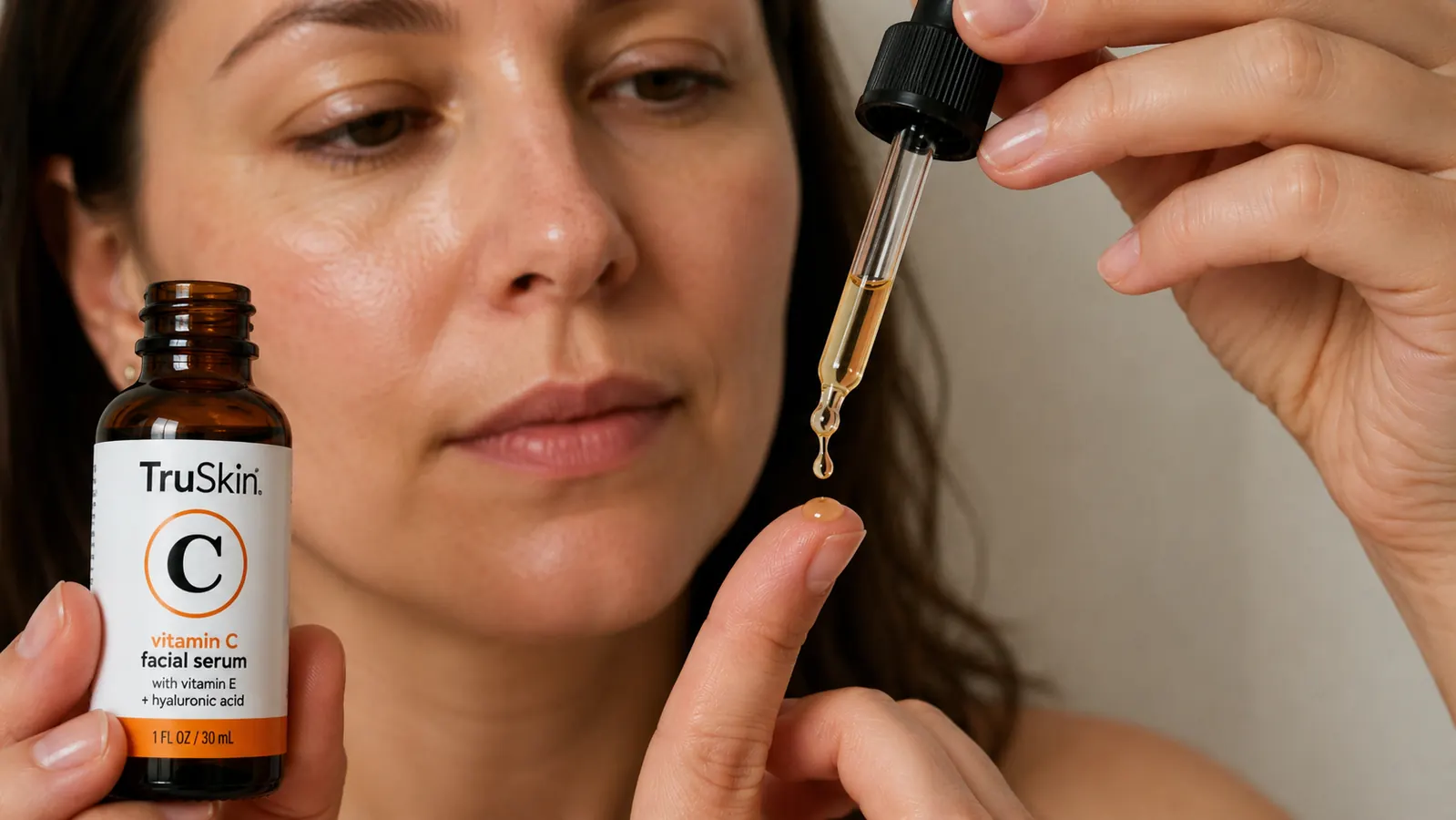
One thing the marketing gets right: the bottle design. Dark glass, tight-fitting dropper, opaque labeling. These are appropriate choices for a formula containing light-sensitive vitamin C. Keep it in a cabinet, not on a window ledge, and the formula will behave consistently through the full bottle. If you want to understand exactly how to layer this serum for dark spot reduction and what else needs to be in place for the results to stick, I covered the full protocol in my guide on how to fade dark spots with vitamin C serum.
What I Liked
- Sodium ascorbyl phosphate is a genuinely stable vitamin C derivative, the golden color is the formula, not degradation
- Vitamin E and ferulic acid synergy is evidence-backed and extends antioxidant activity, not a marketing add-on
- Comfortable on dehydrated and combo skin, including for people who have had reactions to LAA-based serums
- Dark glass bottle with proper dropper is appropriate packaging for light-sensitive actives
- Large real-world use base (155,000+ reviews) provides meaningful signal for how it performs across skin types
- No fragrance-forward scent, though there is a mild herbal note, far below the threshold that causes issues for most fragrance-sensitive users
Where It Falls Short
- Vitamin C concentration not disclosed, positioned mid-list in the INCI, suggesting it is not at clinical-study levels
- SAP converts to active ascorbic acid at lower rates than L-ascorbic acid, meaning longer timelines and more modest peak efficacy
- Botanical brighteners (aloe, jojoba) are present at concentrations that contribute to texture but not evidence-backed brightening
- Results require patient, consistent use with daily SPF, the formula cannot compensate for an incomplete routine
- Not the right choice if your primary goal is addressing established melasma or significant photodamage, which needs stronger tools
- The marketing copy overstates the anti-aging dimension, this is primarily a brightening serum, not a meaningful treatment for fine lines or wrinkles
Who This Is For
TruSkin Vitamin C Serum is the right formula for anyone who has tried a vitamin C serum before and had a bad experience with irritation, purging, or watching the bottle turn orange mid-use. It is well-matched to dehydrated and combo skin types where tolerability matters. It is a strong choice for people whose primary concern is post-inflammatory hyperpigmentation from breakouts rather than deep photodamage, because the brightening mechanism works well on that type of discoloration at the pace the formula delivers. It is also a good starting point for anyone new to active serums who needs a formula with minimal risk of reactivity. The price point makes consistent daily use realistic without the anxiety of using up an expensive bottle correctly.
Who Should Skip It
If you have skin that handles actives well, are not prone to irritation, and want the fastest possible results, a 15-20% L-ascorbic acid serum used and stored correctly will outperform TruSkin. If you are treating significant sun damage or established melasma, vitamin C serum is one tool in a larger protocol and should be combined with azelaic acid, a prescription brightener, or professional treatments. TruSkin alone will not move the needle on deep pigmentation fast enough to feel satisfying. If you are sensitive to fragrance at any concentration, the herbal scent is mild but present and worth noting. And if you are buying this serum expecting a meaningful effect on fine lines or wrinkles as the primary benefit, redirect that expectation to a retinoid. Vitamin C provides antioxidant protection against further collagen breakdown but is not a treatment for existing lines at any concentration.
Know what you're buying, and this serum will probably deliver what you need.
TruSkin Vitamin C Serum uses a stable vitamin C form with real antioxidant synergy. The results are genuine if you apply it daily, protect it with SPF, and give it 10-12 weeks. It is one of the most consistent formulas in its price range. Available on Amazon Prime.
Amazon Check Today's Price on Amazon →