
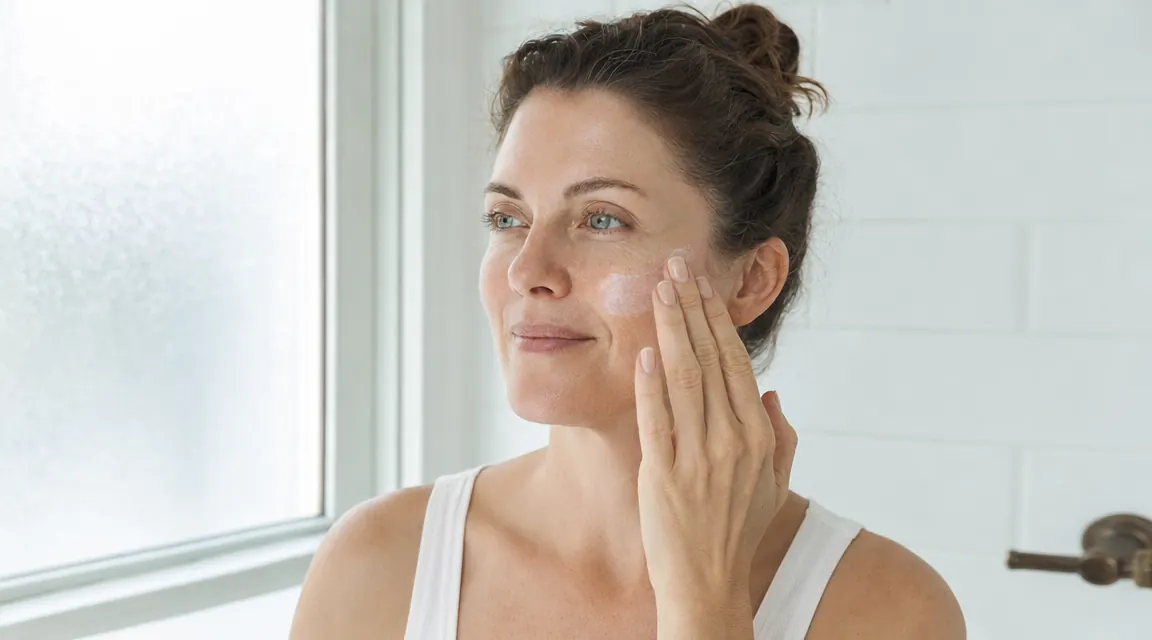
The story of how I finally started wearing sunscreen, daily, every single morning, is the story of one specific bottle: EltaMD UV Clear SPF 46. But it took years to get there. For most of my thirties, I had a shameful skincare secret: I never wore sunscreen. Not because I thought UV damage was a myth. I knew it was real. I knew the photoaging stats, I'd read the melanoma warnings, I'd watched my mother's skin take on that papery sun-damaged texture she'd been fighting since she turned fifty. I knew.
But every sunscreen I tried broke me out. Not slightly. Not a pimple or two I could live with. I mean the kind of breakout that undoes three weeks of careful actives and leaves you staring at your skin at 6 a.m. wondering what you did wrong. So I made a bargain with myself: I'd use a vitamin C serum in the morning for some antioxidant protection, stay out of direct sun during peak hours, and just live with the risk. I told myself it was practical. It wasn't. It was avoidance.
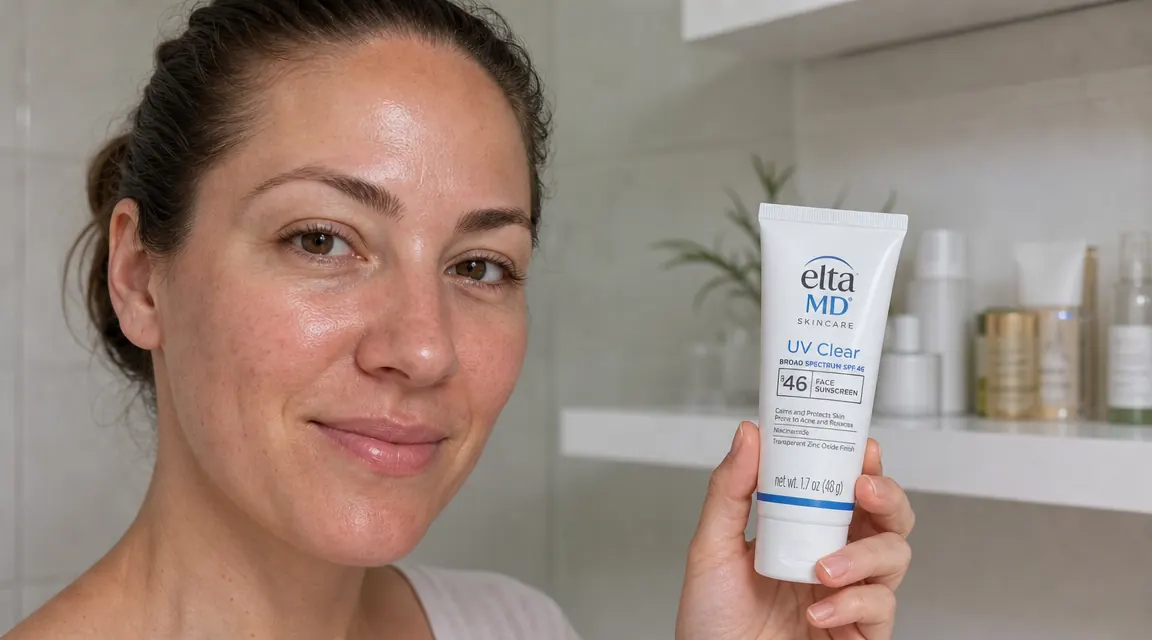
I kept this up until a dermatology appointment I'd booked for something unrelated, a persistent dry patch on my jawline that wouldn't respond to anything in my routine. My derm took one look at my forehead and asked, matter-of-factly, if I was wearing daily SPF. I admitted I wasn't. She didn't lecture me. She just reached into her sample drawer and handed me a small tube.
EltaMD UV Clear SPF 46. She said: try it for three weeks and then tell me it breaks you out. The tone was not unkind. It was the tone of someone who has said this to approximately four hundred people before you.
I'd tried gel SPFs, 'invisible' SPFs, SPFs marketed specifically for oily skin. Every single one of them broke me out within a week. I had genuinely started to believe my skin was incompatible with sun protection.
I went home and looked it up before I even opened the sample. The active ingredient is 9% zinc oxide, which is a physical blocker, it sits on top of the skin and reflects UV rather than being absorbed into it. That matters for people like me, because it's the chemical filters (avobenzone, oxybenzone, octinoxate) that most commonly trigger comedone formation on breakout-prone skin. Zinc is generally considered non-comedogenic, and it has mild anti-inflammatory properties too.
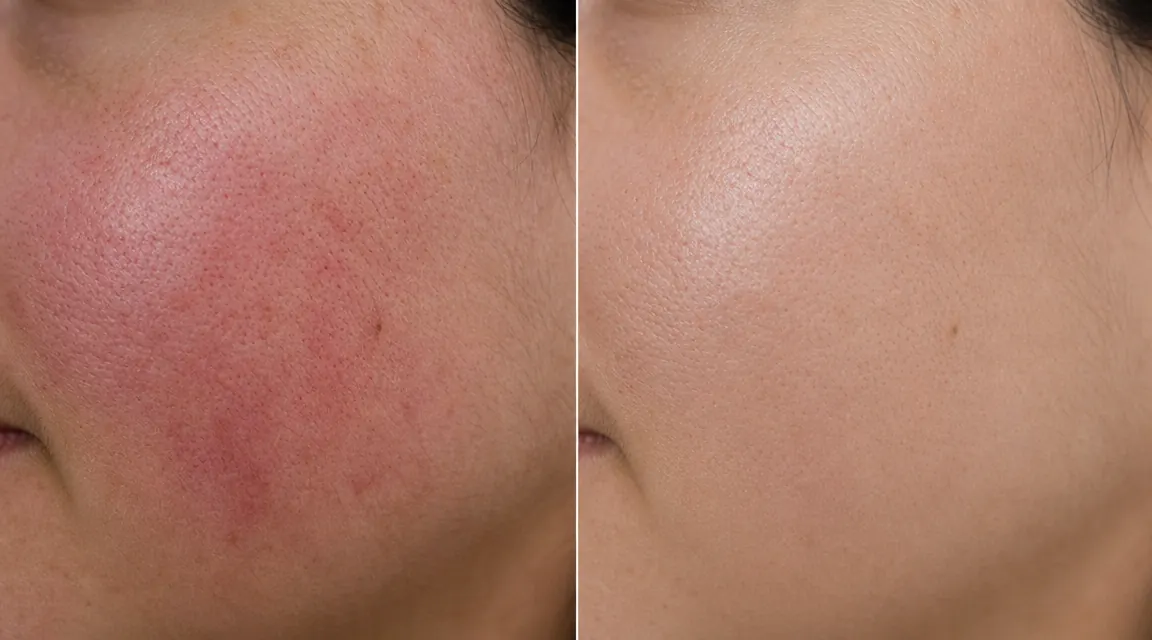
The inactive side of the formula has niacinamide, which I was already using in my routine and trusted. Niacinamide calms redness, regulates sebum production, and helps keep pores from getting congested. So at the ingredient level, this was already a different category than anything I'd tried before. It wasn't just marketing 'for sensitive skin', the formula was actually built around not provoking the skin.
If breakouts have kept you off daily SPF, the formula matters more than the brand.
EltaMD UV Clear uses 9% zinc oxide and niacinamide instead of the chemical filters that clog pores. It's the sunscreen that dermatologists hand to the people who've given up on sunscreen.
Amazon Check Today's Price on Amazon →The first morning I used it, I was braced for the usual outcome. Instead: it absorbed. Not in a mattifying, drying way. Just gone, in a neutral, this-is-now-part-of-my-skin way. There was no white cast, which surprised me given the zinc concentration. My skin looked even, not greasy. I put on my regular tinted moisturizer over it and it held fine.
By day four I was still waiting for the breakout. It didn't come. By day ten I had lowered my guard. By three weeks, the timeline my derm had given me, I had exactly zero new comedones I could attribute to the SPF. That was a first. In fifteen years of trying sunscreens, that had never happened.
I want to be careful here not to oversell this. EltaMD UV Clear is not a one-size-all solution. If you have very dry skin, it might not give you enough moisture on its own and you'd want to apply it over a hydrating serum. The tinted version exists and is slightly more hydrating than the untinted one I use, so if your skin trends drier, that's worth exploring. And at around $45 for 1.7 oz, it is more expensive than a drugstore SPF. That's a real consideration.

But for combo, breakout-prone skin that has failed every other sunscreen formula? The calculus changes. Skipping SPF entirely isn't 'saving money', it's trading current-day breakout avoidance for long-term photoaging and compounding sun damage. I made that trade for years. I don't think it was worth it.
What I'd Tell You If We Were Sitting at My Kitchen Table
Here's the honest version: if you have breakout-prone skin and you've given up on daily sunscreen because every formula you've tried clogs your pores, the problem is almost certainly the chemical filters, not the SPF category itself. The ingredient list is the thing to read before you buy another bottle.
Look for zinc oxide as the active. Look for niacinamide in the inactive ingredients. Avoid formulas with coconut oil, isopropyl myristate, or a long chain of silicones high up on the list if your skin tends toward congestion. EltaMD UV Clear clears all of those bars. That's why it works for the people who tell their derm, as I did, that sunscreen just doesn't work on their skin type.
It took me until my late thirties and a dermatologist with no patience for my excuses to get here. If I can shortcut that timeline for someone else, that's the point of writing it down. Check the current price on Amazon, read the 47,000 reviews if you want the crowd-sourced confirmation, and then try it for three weeks. Your derm will thank you.
Three weeks. That's what my derm asked for. It was enough.
EltaMD UV Clear SPF 46 is the sunscreen dermatologists recommend for acne-prone and sensitive skin. Zinc oxide active, niacinamide formula, no chemical filters that trigger breakouts.
Amazon Check Today's Price on Amazon →